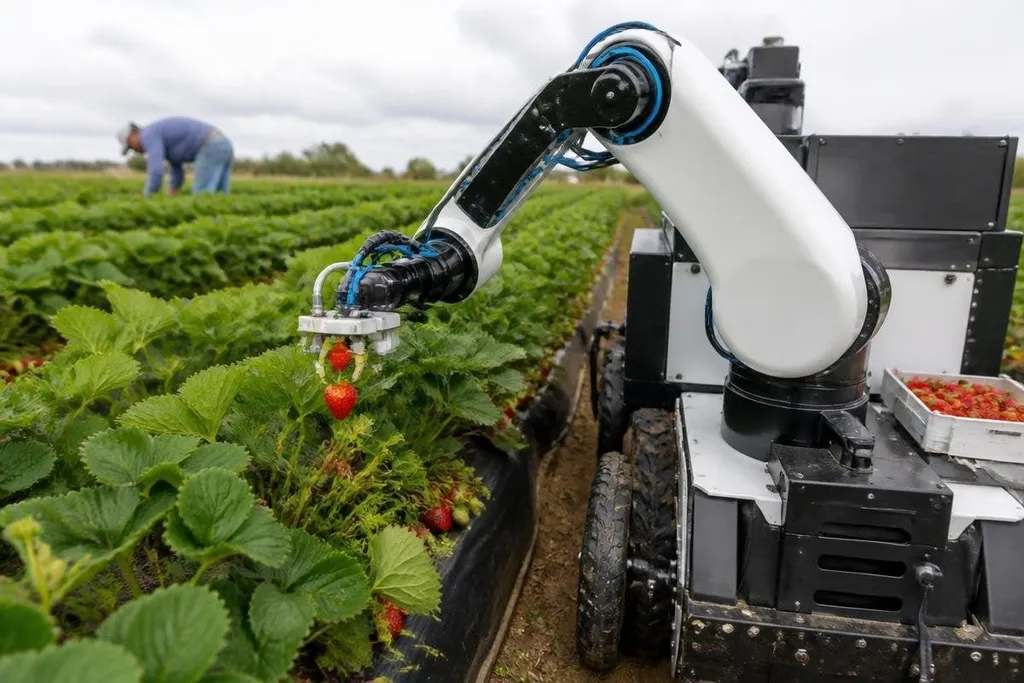
A harvesting robot has to find a ripe crop, reach it without damage, remove it, and place it safely. That chain is harder than moving a box across a warehouse, because fruit and vegetables vary in size, shape, position, and strength.
This matters to a farm manager weighing automation against seasonal labor. The useful question is not whether a robot can pick one item in a clean demonstration. It is whether the system can keep working across a full crop, in changing light, weather, and field conditions.
Quick read
- Crop shape and ripeness set the task’s difficulty.
- Lower hand work may come with slower picking and higher setup needs.
- A purchase needs field results, service terms, and a clear plan for failed picks.
What a harvesting robot has to do
Most harvesting systems combine cameras or other sensors with a robot arm, a gripper, and software that chooses what to pick. The gripper is the part that touches the crop. It may cut a stem, hold an item with soft fingers, or use suction when the surface allows it.
The robot must also judge ripeness and location. Leaves can hide the target, while fruit can sit at different heights and angles. A machine that works well on exposed crops may slow down when the same crop grows inside dense foliage.
Speed creates another trade-off. A careful grip can reduce bruising, but extra checks take time. A fast motion can raise output, yet one bad contact may damage the crop or the robot’s end effector, the tool mounted at the end of its arm.
Where the benefits appear
The clearest gain is a reduction in repeated hand work. Picking, cutting, and carrying can place strain on workers, especially when the task runs for long periods. A robot can repeat a programmed motion while a person handles supervision, quality checks, loading, or repairs.
Automation may also help with work that is hard to staff at the right time. Harvest windows can be short, and a delay can leave ripe produce in the field.
A robot that works at a steady rate could help a farm cover more rows during that window, provided its pace matches the crop and its support team can keep it running.
Data can add another benefit. Cameras on the machine may record which areas it visited and which items it rejected. That record can help a farm compare crop conditions, though the maker must explain what the system measures and how the data can be exported.
Crop type, weather, rejection rate, and the hand work left after each run can change the value of a harvesting robot. A grower comparing those claims can use Robot 24 to examine the machines and companies behind them before weighing the risks.
Where the risks start
The farm is a difficult place for a machine. Mud, dust, rain, uneven ground, glare, and plant movement can affect sensors and motion. A robot may need a person nearby when a stem is hidden, a bin is full, or the machine stops in a narrow row.
Crop damage is another risk. A bruise may not show at the moment of picking, yet it can reduce sale value later. Ask for results measured after handling and packing, not only the number of successful grabs in a short video.
The business case can also fail through downtime. Repairs, spare parts, software support, battery charging, and operator training all add work around the robot. If a farm needs a technician from far away, a small fault can stop harvesting during the very period when time matters most.
I'd treat any harvesting robot as a crop-specific tool, not a general replacement for a farm crew. A system built for one crop, row layout, and picking method may need major changes before it works elsewhere.
The evidence gap
Public demonstrations rarely answer every buying question. Check whether the maker reports results from real rows, across changing conditions, with clear definitions for successful picks, damaged produce, rejected items, and operator time.
The missing number is often the cost of a failed pick. If the robot leaves ripe produce behind, a worker may need to return through the row. If it damages produce, the farm may lose more than the robot saves on hand work.
A sound trial should compare the robot with the current process on the same crop. Record output per hour, damage after packing, stops per shift, labor hours around the system, and repair time. Keep the trial long enough to include the normal changes in crop position and field conditions.
A purchase check
Use these questions before signing a contract:
- Name the crop: Which crop, variety, row spacing, and picking method did the maker test?
- Check the measure: Does “successful pick” mean the item was removed, or that it reached the saleable bin undamaged?
- Count the people: Who loads bins, clears jams, checks quality, and fixes sensor or gripper faults?
- Price the pauses: What do charging, cleaning, spare parts, software support, and lost harvest time cost?
- Set a trial rule: Which output and damage figures must the system reach before wider use?
The purchase makes sense only when the robot’s measured picking rate, crop damage, downtime, and support needs fit one specific farm. Until a maker supplies those figures from comparable field work, treat the machine as a trial project and keep the manual process ready.